Reading Update - January 15, 2026
I want to write a recurring post recounting my reading experiences and sharing what I learned (inspired by Dwarkesh Patel). I finished two books over the break. One was a big book on western philosophy and the other was a textbook on neurobiology.
The History of Western Philosophy (Bertrand Russell)
This book is like a literal odyssey that journeys from Ancient Greece to the modern day, addressing the most pressing and unresolved philosophical questions of each period and re-examining them within their historical context. Hobbes was shaped by the chaos and fear produced by the English Civil War. The Hellenistic period encouraged cosmopolitanism and tolerance across cultures, contributing to new attitudes toward religion, ethics, and personal salvation. The shifting power dynamics between the Roman Catholic Church and the kings of Europe reveal how struggles over authority, legitimacy, and sovereignty shaped both political theory and philosophical conceptions of law, obedience, and moral order.
Somehow I finally managed to understand what philosophy is about. It isn't just people asking abstract questions because they had the leisure to do so. It is grounded in the historical conditions of each philosopher's time. The frustrations, anxieties, and curiosities that shaped each major figure were consequences of earlier historical periods. Often we see large swings between opposing tendencies, such as romanticism and liberalism. At other times, we see persistent threads running across centuries, such as humanism from the Renaissance to the modern era. With each stage, ideas become more refined and nuanced, as in the progression from Descartes to Locke.
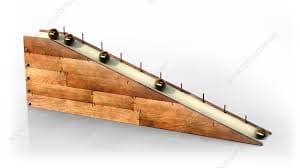
Although off-topic, one of my favorite parts was understanding the Scientific Revolution and how it led to Newton's theories of motion. How was acceleration scientifically observed? Galileo performed experiments which formed the first questions on kinetics, relating acceleration to time. He did so by rolling a ball on an incline platform and measuring the time and distance it took for different angles of inclination.
Neurobiology of Learning and Memory
This textbook offers a spectacle into how memory operates at the psychological, cellular, and systems levels. It also shows how those mechanisms give rise to learning.
Part I
What is learning and memory? The book first introduces learning and memory from a psychological standpoint. Historically, before highly advanced tools existed, memory was studied behaviorally. For example, patients were asked to memorize arbitrary word lists and later recall them. Performance is quantified by the fraction of correctly recalled items.
A central insight is that memory itself is not directly observable. It can only be inferred from behavior. Neurobiology's task is to connect behaviors to the structures in the brain.
Where do we start in the brain? The fundamental building block of memory: synapses. They are the areas between connecting neurons that encode memory. Why is brain memory so special? Because we can fluidly form memories and experiences based on what is important. Synaptic plasticity refers to the ability of these connections to change based on activity. Without plasticity, learning and memory would be impossible, as experiences could not modify neural circuits.
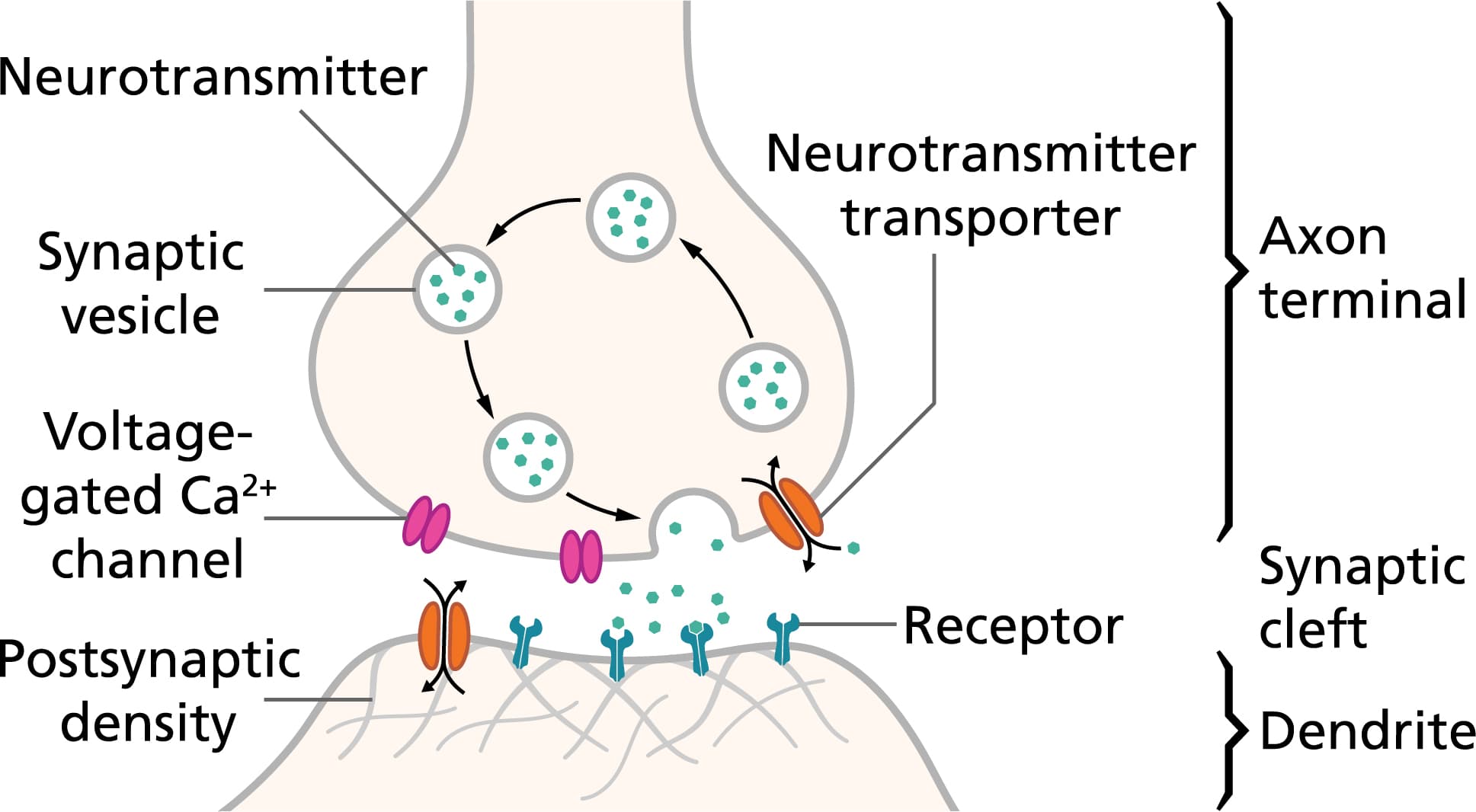
At the molecular level, the book describes how glutamate, the brain's main neurotransmitter, mediates synaptic transmission. When glutamate binds to AMPA receptors, it triggers genomic signaling cascades. Through NMDA receptors and calcium ions, these cascades lead to long-term strengthening of synapses (e.g., increased AMPA receptor density and stronger dendrites). And that's how we memorize things!
Part II
I don't remember much about part 2, except a few cool concepts/ideas here and there. Among them is that recall destabilizes memory. Every act of retrieval temporarily renders a memory trace labile, requiring a process called reconsolidation, which depends on protein synthesis. When retrieval events are appropriately spaced allowing reconsolidation to complete, memory strength increases. This explains why spaced repetition is more effective than massed practice!
Part III
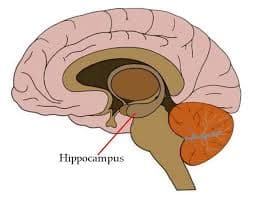
The final section shifts from synapses to neural systems: aka whole subcomponents of the brain ingesting particular stimuli, gathering relevant context, and sending an action command to the motor neurons. A major focus is the hippocampus, which supports episodic memory. According to the indexing theory, the hippocampus does not store detailed memories itself. Instead, it acts as an address system that links together distributed cortical representations. Pretty neat!
The book talked about how actions are created. The striatum, located within the basal ganglia, functions as a gate between cortical representations and motor systems, selecting which action plans are expressed.
The final chapter examines the fear system. Like Pavlovian conditioning, the lateral and basal amygdala integrate conditioned stimuli, unconditioned stimuli, and contextual information (often supplied via the hippocampus). These signals drive defensive responses to the motor neurons.
Overall, this book was so fascinating and dove into so much technical depth. The clinical experiments performed on humans and animals (mostly rats :( ), were so painstakingly detail-oriented. It makes me realize how much we underestimate scientific, natural procedures.